Read or Die

Read.or.Die.full.1409463

OVA

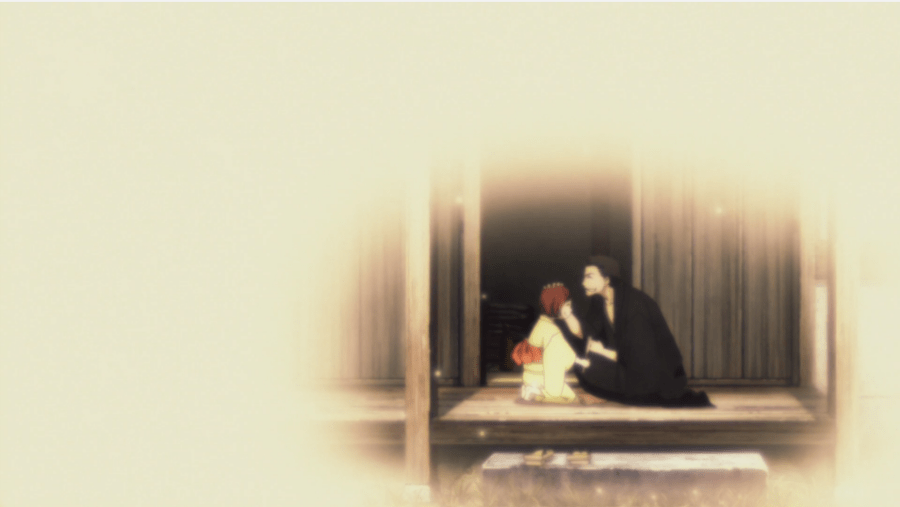
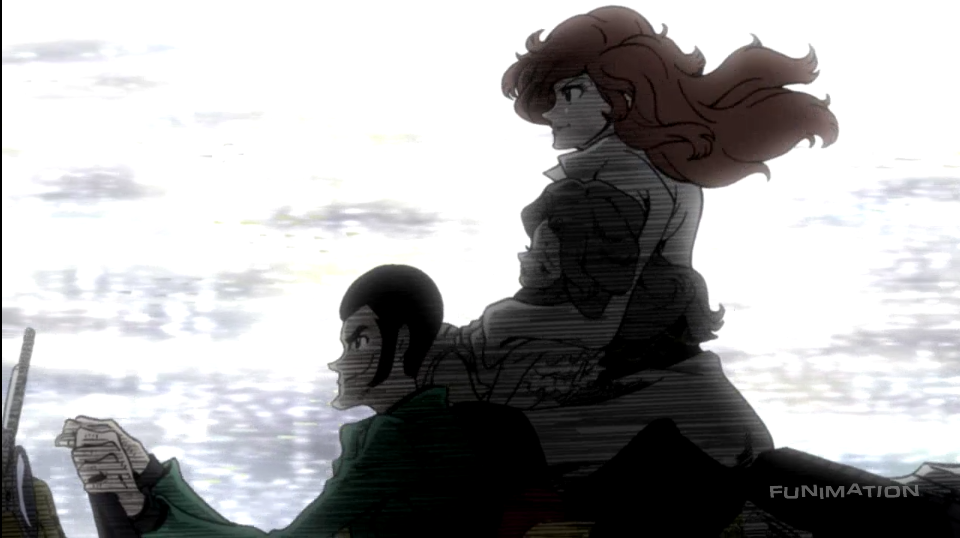
Summary: If you met Yomiko Readman on the street, you’d think she was a shy, awkward young woman who lived her life in the pages of a book. You’d be right, of course, but you probably wouldn’t guess that she’s also The Paper, an agent of the British National Library with the power to wield paper as a weapon. When a group of superpowered clones known as I-Jin attack, determined to get their hands on a copy of Beethoven’s Immortal Beloved Yomiko picked up by chance from a used bookstore, it’s up to Yomiko and her new partner, Nancy “Ms. Deep” Makuhari, to stop them.

Content Warnings: Abusive relationships

Would I recommend it: Sure! It’s a fun little action romp.

In 2002, the OVA of Read or Die was released in the US, despite being a sequel to a manga that had not been commercially translated into English. Despite the lack of context, it seemed to be tailor-made to be a hit with Western audiences, driven primarily by exciting action set-pieces with superpowers and the sci-fi twist of villains based on historical figures. Its slim 100-minute running time leaves little for character development and, considering its status as a sequel, doesn’t really prioritize it. Despite that, or perhaps because of it, there is an effortless sense of characterization, allowing first-time viewers to get a sense of its two main characters as people. Yomiko Readman and Nancy Makuhari could easily have been a helpless moe girl and a fan service vehicle respectively, but are instead given a surprising amount of depth.

Continue reading “Read or Die”

Romance and Abuse in Shoujo Manga Part 4 – Conclusion

Part 1
Part 2
Part 3

You only hurt the one you love…. (32)

Why does it matter? Why should we have these conversations? It’s not like a headstrong girl will go out and read a shoujo manga about a girl in a relationship with an abusive boy and instantly become a doormat. But it normalizes and romanticizes abusive behaviors and creates a culture of abuse. Once again, I want to emphasize, if a girl reads a manga and thinks that it’s okay to be treated like this and someone proceeds to, it’s not her fault. It is not her fault! This creates a culture of abuse that associates aggression and dominance with masculinity and sacrifice of the self for the sake of romance: “I love him, therefore I have to put up with this. He only treats me like this because he loves me.” These are very common cultural myths that need to be actively combatted and actively talked about and criticized, or else impressionable young readers – I started reading manga myself when I was about twelve years old, well before I had ever been in a relationship and while my personality was still forming. Luckily I was also reading things like Tamora Pierce, who writes about confident young women, though she has her own issues, like the age difference thing…

Continue reading “Romance and Abuse in Shoujo Manga Part 4 – Conclusion”

Romance and Abuse in Shoujo Manga and Anime Part 3 – Signs of Abuse

Part 1
Part 2

You only hurt the one you love…. (19)

Now we’re getting more into the actual, physical forms of abuse that are not just tropes in fiction. This is physical abuse – pulling hair, punching, slapping, kicking, biting, anything that brings harm to your body. Damaging your property out of anger. Forcing you to use drugs or alcohol was a really weird one in Hana Yori Dango because he kidnaps her, drugs her, and she wakes up to being given a makeover, and that’s like, “Oh, he just doesn’t understand how to be nice to her, that’s why he did that. He was just trying to be nice!” He drugged her. He drugged her. The property tends to involve phones, because that is an avenue of communication with other people. If they’re communicating with other people, the guy will destroy the phone in a temper tantrum.

Continue reading “Romance and Abuse in Shoujo Manga and Anime Part 3 – Signs of Abuse”

Romance and Abuse in Shoujo Manga and Anime Part 2 – Tropes

Part 1

You only hurt the one you love…. (11)

One of the things people brought up as something that made them uncomfortable was age differences. It’s a very common fantasy for young women, which is why it’s so common in shoujo manga. “Oh, this hot teacher… he’s so attractive… What if he fell in love with me?” And people generally mentioned Sailor Moon, because Mamoru is in college and Usagi is in middle school; and this particular couple in Cardcaptor Sakura, because she’s in elementary school and he’s her teacher. [audience groans]

It is a common fantasy, but there’s an inherent power imbalance here, and all the time you see stories about young women who end up sleeping with their teachers and it’s what they thought they wanted – and this is not victim blaming, it is 100% on the adults to not do it with them – but since they see these fantasies, and they find themselves in these situations, they don’t have the tools to get away. Once again, I want to emphasize, it is never the victim’s fault. I don’t want to come across like I’m victim-blaming, ever.

Continue reading “Romance and Abuse in Shoujo Manga and Anime Part 2 – Tropes”

Please Tell Me! Galko-chan: The Grossest Educational Anime You’ll Ever Watch

More often than not, the new anime season has a surprise. It could be a highly anticipated show that ends up dropping the ball in unexpected ways; it could also be a show no one was paying much attention to that ended up being unexpectedly funny, thoughtful, or otherwise high quality. Last year had a number of the latter sort, such as Osomatsu-san and Maria the Virgin Witch. Winter 2016 has been going pretty much as expected – the shows everyone expected to be good are good, and the ones generally expected to be crap are. This season’s biggest surprise is Please Tell Me! Galko-chan, a short series made up of seven-minute episodes. Based on the promotional art – specifically, the main character’s enormous breasts vacuum-packed into her cardigan – it looked to be an unremarkable fan service show. However, the positive word of mouth it was getting after the first episode intrigued me, and I decided to check it out despite my better judgment. I’m glad I did, because rather than perverse, male-oriented comedy, I got a charming series about three teenage girls frankly discussing their bodies without shying away from the grosser parts of the human experience.

Continue reading “Please Tell Me! Galko-chan: The Grossest Educational Anime You’ll Ever Watch”

Showa Genroku Rakugo Shinju 1-2: It’s a Man’s, Man’s, Man’s, Man’s World

Note: As always, this analysis assumes the reader has seen the episodes being discussed.t224

Rakugo is a traditional form of Japanese theater in which a lone performer, aka the rakugoka, sits alone on a stage with only a small cloth and fan for props. They tell a story, usually comedic, involving multiple people, distinguishing the characters using only their voice and mannerisms. Rather than making up their material, rakugoka have an established body of material to work with but are expected to put their own spin on the story. These days, it’s considered the domain of fussy old people, but it was once populist entertainment.

Like most traditional performance arts, rakugo is completely male-dominated. Once it was the sole domain of men, since most of the characters in the stories were male and it would have been odd to hear women using masculine speech patterns. Nowadays the field has opened somewhat, with women and foreigners (and occasionally both!) among top performers. Showa Genroku Rakugo Shinjuu takes place before that shift, however, and the gender dynamic inherent in such an unequal system informs much of the show.

Continue reading “Showa Genroku Rakugo Shinju 1-2: It’s a Man’s, Man’s, Man’s, Man’s World”

Who is the Woman Called Fujiko Mine? Part One

Fujikomine

“Women never show themselves in their natural form. That is to say, they are not so vain as men, who conceive themselves to be always amiable enough just as nature produced them.”

Goethe

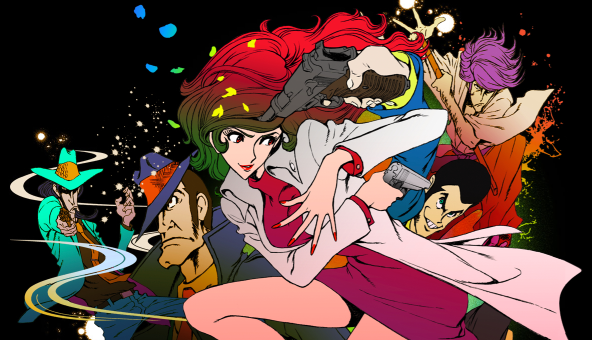
In the sixth episode of The Woman Called Fujiko Mine, Fujiko reads this passage to a class of adoring high school girls while in disguise as a teacher. This quote resounds throughout the show – Fujiko is a chameleon, disguising herself to slip past men’s defenses and take their wealth. In an instant, she can turn from a traditional Japanese beauty serving tea, to a purring sex kitten. Because of that purposeful sexiness, men often overlook or underestimate her, letting down their guard so that she can get to what she wants. Similarly, female director Sayo Yamamoto and writer Mari Okada deliberately draw upon narratives of tragic, damaged women who are wicked because of their trauma. Much like how Fujiko acts according to men’s expectations to lower their defenses, Yamamoto uses the narrative conventions to  build to a stunning twist that comments on the importance of agency and of women controlling their own narratives.

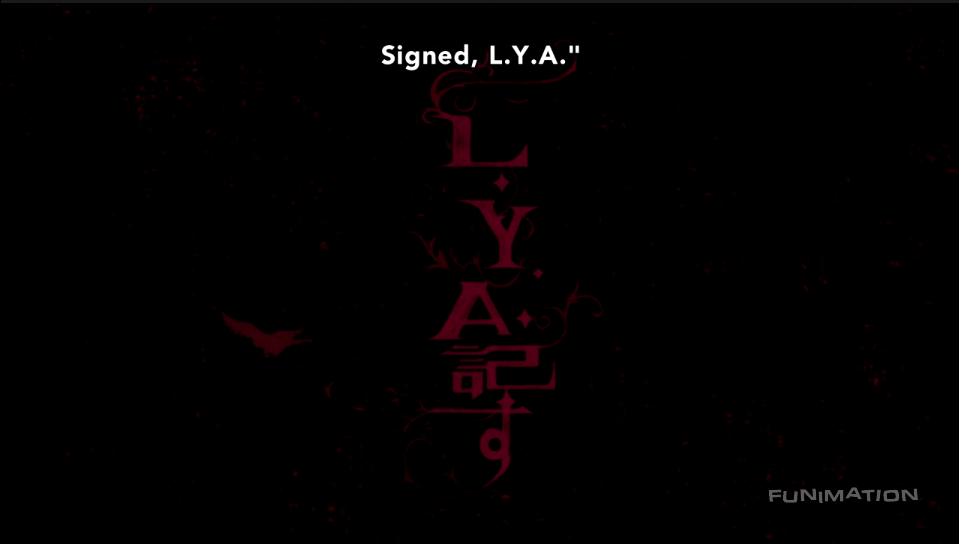
It seems, these days, every female villain needs a tragic backstory. Women are rarely allowed to be simply wicked, but instead victims of some great injustice or trauma. She’s not flawed, she’s damaged – spurned by a lover, or raped, or injured at the hands of men in some way. The Woman Called Fujiko Mine sets up this expectation from the outset, as baroque text flashes across the screen proclaiming, “Fujiko Mine, stripped of all her love. Your sweet scent shall draw three rogues to you, and so this tale of hijinks shall unfold. However, you must never forget. The overcast skies you see are painted from my palette. Signed, LYA.”

be09c7e13555c628879710965ddb4aaa

The “LYA” who wrote the letter is Count Luis Yu Almeida – eventually revealed to be Aisha Kaiser, the mastermind behind the show’s central mystery. Small hints are dropped to further lead the viewer to believe Fujiko steals because of how damaged she is. In the first episode, Lupin comments, “That woman is off her rocker. She infiltrated a dangerous place like this all alone just for some drugs. She’s so far off the rails she’s even willing to kill, she’s so masochistic she doesn’t care how far she falls… I kinda like that.” In the next episode, after Fujiko unwittingly leads the suicidal Cicciolina to end the life she had so little control over, she says of the woman, “Something about her reminded me of myself. That’s why I went along with her little thief act.” Moments like this, and other similar ones, set the foundation for Fujiko as a tragic heroine, a poor amnesiac who steals to fill some hole in herself. She is selfish and greedy, uses sex for her personal gain, and prefers vice to virtue.  Of course, so does our hero Lupin, but his motives are never questioned. As a man, he is allowed to simply be who he is, whereas Fujiko, as a woman, is compared to notions of how a woman should be.

Although the other major recurring characters are all men, Fujiko encounters several other women throughout the series, whose past tragedies set up the expectation that, like them, Fujiko is deeply damaged and steals to fill some void. In episode two, “.357 Magnum”, Fujiko wagers herself at a casino and loses. Cicciolina, the owner, offers her freedom in exchange for the gun belonging to Daisuke Jigen.
owl-window

Things aren’t as straightforward as it seems, as it turns out that Cicciolina and Jigen have a sordid past: A bodyguard who fell in love with his boss’s suicidal wife, ending with the bodyguard shooting the woman’s husband. The plan, engineered by Cicciolina and carried out by Fujiko, ends with Jigen shooting his former lover. As she dies in Jigen’s arms, she tells him, “I thought about killing you. I thought about just dying. But if I was going to die… I wanted you to be the one to kill me…”

4-Jigen-Lupin-Mine-Fujiko-Episodio_2

Later, Fujiko tells Jigen, “Something about her reminded me of myself. That’s why I went along with her little thief act.” Cicciolina was suicidal, suffered from ennui, and had every part of her life controlled by the men around her – what part of her could remind Fujiko of herself? When a woman is so thoroughly troubled, anyone who she reminds of themselves must be troubled as well. Fujiko has little memory of her own past, so it remains conveniently vague exactly how she and Cicciolina are similar while still setting up viewer expectations that Fujiko has some dark past unconsciously driving her.

In the ninth episode of the series, “Love Wreathed in Steam”, Lupin and Jigen steal a tattooed girl from a sideshow act turned auction. Fujiko, destabilized from an encounter with a fortune-teller who tried to tell her the date of her death, ruthlessly pursues the three with no regard for her own safety. The Kaleidoscope Girl, tattooed from birth and paraded around the world with a made-up origin story by a male artist, is nonverbal and feral: when Jigen looks her over, she cries out and scratches his face. She has been raised as an object for male desire and gain, with no regard for her personhood. As Lupin observes, “She’s always been treated like just another painting and never given a real education or treated like a human.”

395e2b84ef06eee6d1153aa27aca04aa

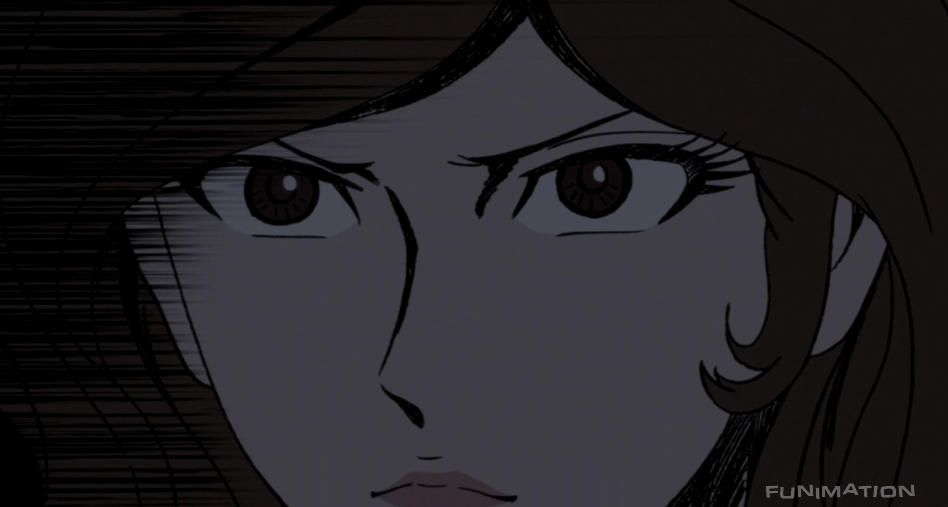
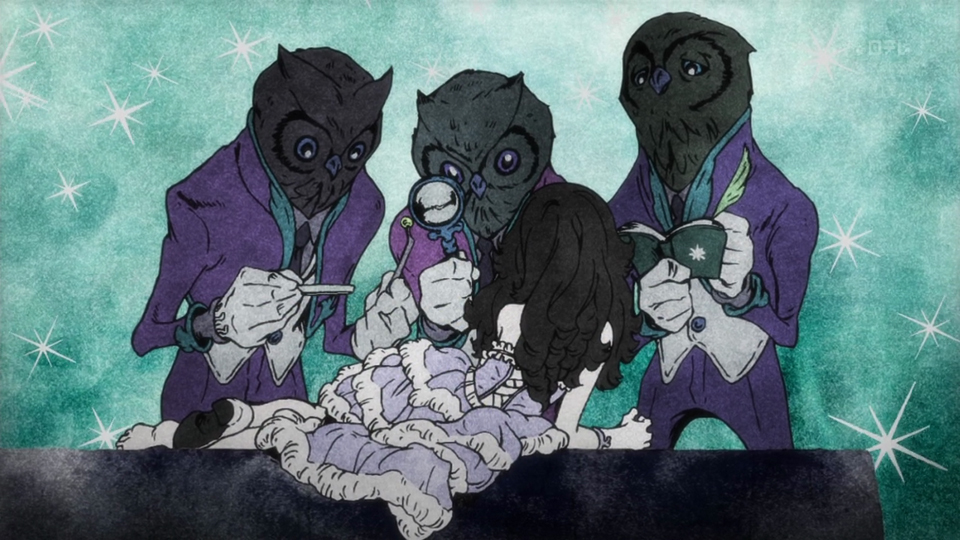
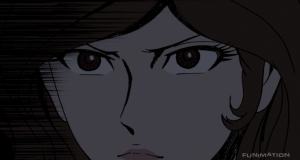
In a flashback, we see that Fujiko saw a commercial for the girl while watching TV with one of her latest gold digging victims. When the commercial announces, “Enjoy a sublime work of art along with the tale called ‘Her Life’,” Fujiko grows upset. As she goes to wash her face, “The tale called ‘life…’ The tale called ‘Fujiko Mine’… give your tale… to me,” flashes across the screen, intercut with shots of a young girl being operated on by a group of owl-headed men while conscious and terrified. This isn’t the first time the audience has seen this little girl, as throughout the series we’ve seen flashes of her being tortured and raped by the owl men. Fujiko says to herself, “I swear I’ll make it mine,” and during the pursuit says, “That woman belongs to me.” She at once subjectifies and objectifies the girl, identifying with her while simultaneously claiming ownership. The artist co-opted her life and turned into a narrative for others to enjoy, but then Fujiko, projecting herself so strongly on the girl, attempts to co-opt it for herself. There is nothing playful or strategic about her pursuit of the Kaleidoscope Girl, only the cold intent to kill. She rushes at Lupin and Jigen shooting, unafraid to kill the man who up until then has been her partner and ally in many situations. The camera frequently focuses on her eyes, uncharacteristically cold and angry.
e969f015f1aa436e521ac55eb7f8bfa0

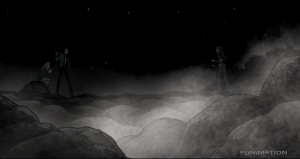
When she corners Lupin and the Kaleidoscope Girl at the source of a hot spring, Lupin observes, “You’re out to kill her, aren’t you? No, that’s not it. It’s yourself you want to kill.” Fujiko replies, “If it is, Lupin… what am I supposed to do?” As she aims Lupin’s own gun at her head, surrounded by flammable gas, she not only wants to kill herself but is willing to take out Lupin and the Kaleidoscope Girl in her desperation to escape a life where she thinks her every action has been manipulated and controlled by strangers.
81fc707ad284053f63162b1156dac78a

At the end of the episode, Lupin and Jigen leave the Kaleidoscope Girl at a temple in hopes that she will be cared for in some way, rather than trying to profit off her. In doing so, they break the cycle of exploitation the girl has faced, choosing to act in her best interest rather than profiting off her body like the men before them. Fujiko, meanwhile, wanders along the side of the highway, muttering, “What the hell,” until she runs into Goemon, who takes her in.

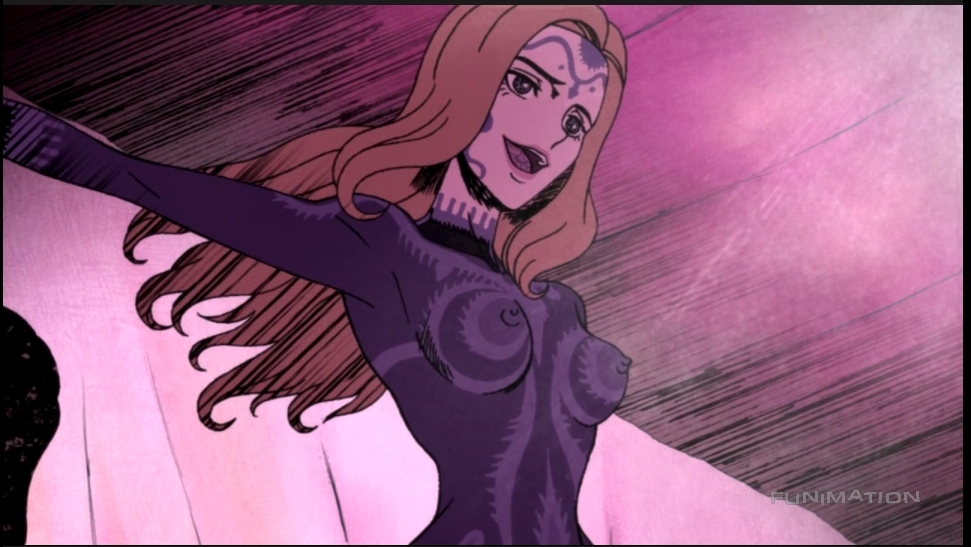
After eleven episodes of build-up pointing to Fujiko as a traumatized woman who commits theft due to repressed memories, The Woman Called Fujiko Mine reveals its final twist in the two-part finale of the same name. Fujiko, after the apparent death of his lieutenant Oscar, accompanies Zenigata to an eerie abandoned amusement park on the site of Glaucus Pharmaceuticals, the company responsible for her memories of being tortured as a child. There she meets Aisha, a young girl who, while posing as Count Luis Yu Almeida, implanted memories of her own torment at the hands of the real Count into dozens of young women, including Fujiko.

02+Aisha-chan

As her owl-headed servant explains, the original Count Almeida, Aisha’s father, inflicted such terrible trauma on her that she only remains in control of her eyes, leaving the rest of her body paralyzed. She  planned, using a computer that reads her eye motions to give the narrating assistant instructions, to give other girls her memories because she “wanted to know her ‘what-ifs’” – what her life could have been like if she could still move. She continued the cycle of victimization that her father started, subjecting others to the same torment she had been through. This pattern is well-documented: victims of abuse are disproportionately likely to become abusive later in life.

original (1)

Most of Aisha’s victims committed suicide shortly after she released them, but Fujiko was already an adult with her personality fully formed. “Being a thief was an unexpected ‘if’, but Miss Aisha was pleased with it,” her assistant says. Aisha assumes – as does the viewer – that Fujiko’s hedonistic lifestyle sprang from her fresh memories of old trauma as a coping mechanism. She assumes she has control over Fujiko’s life, that she completely rewrote the course of her destiny and this would be the life that Aisha would be living. When she realized Fujiko had blocked out her implanted memories, she grew enraged and hired Lupin to force her to remember. She took Fujiko’s narrative and superimposed her own onto it and attempted to control it. What she did wasn’t far off from what the artist did to the tattooed girl, and what her own father did to her. The message here is clear: women must control and fiercely guard their own narratives to avoid becoming defined by their victimhood. The Woman Called Fujiko Mine, written and directed primarily by women, came at a time when the anime industry was focused mostly on stories about girls made for and by men. These girls, primarily modeled on moe archetypes rather than anything resembling human personalities, were innocent and precious and their vices only served to make them cuter and inspire protective feelings in their male viewers.

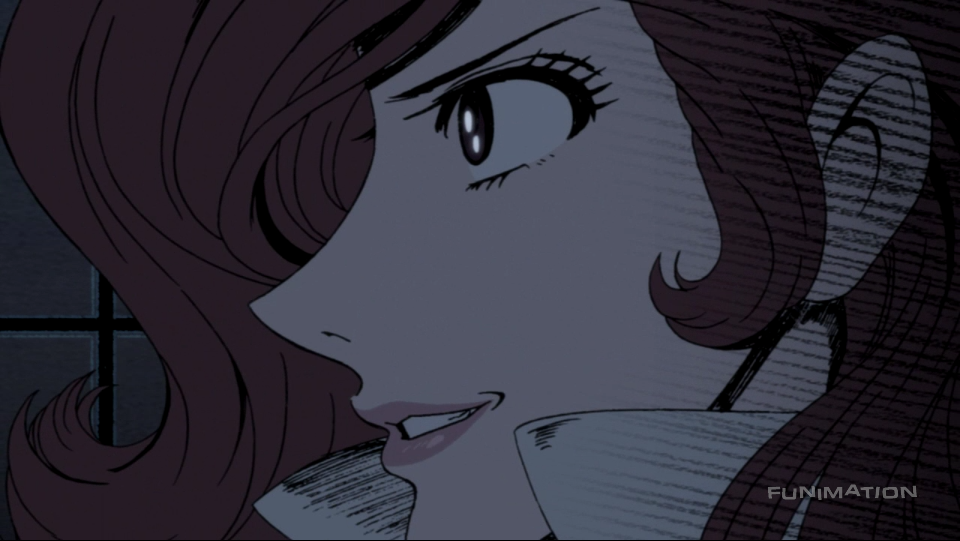
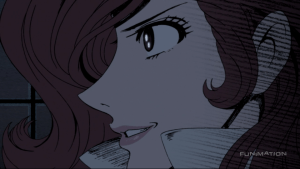
Fujiko, at learning Aisha’s foiled plan, smiles and says, “The occasional failure adds to my feminine charm, doesn’t it?” Her playful, cavalier demeanor is that of Fujiko early in the series, before she encountered the tattooed woman. As it turns out, all her memories returned, including the ones from before she came to Aisha’s mansion as a maid. “Thievery and casual sex were my scene long before I met you. No matter what past anyone feeds me, I’m still myself. You’re looking at the woman called Fujiko Mine.” Her narrative is her own, and not what was created by Aisha.
dc1b7eb65bbdaf3b5e6faad4b7a8b1ba

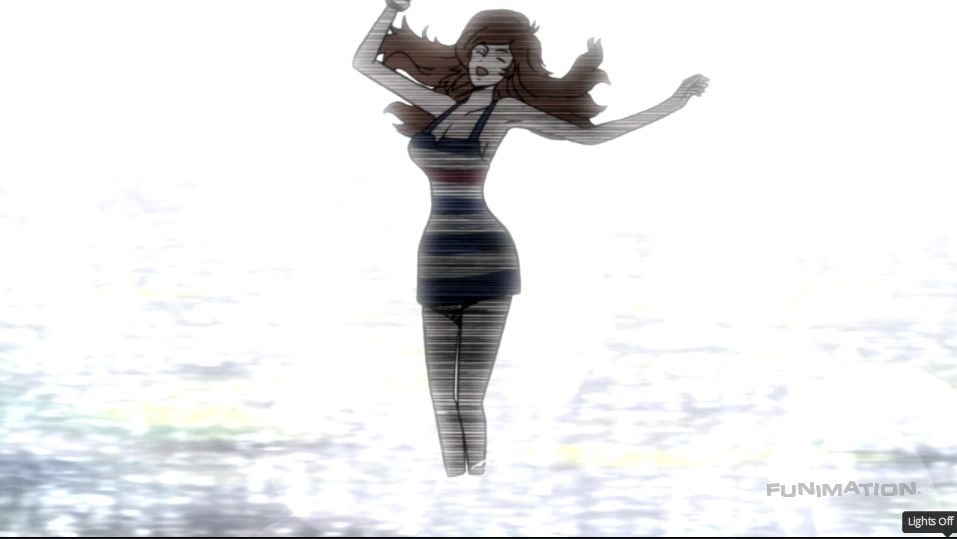
She’s lucky – she can go back to who she was before her abuser tried to take it away. Countless others aren’t so lucky, if they even have a time in their life before the abuse happened. Some, like the painted woman, lack the ability or knowledge to build their own lives, while others such as Aisha only know how to continue the cycle. Just as tragically, Aisha’s owl-headed servant is revealed to be her own mother, plagued by guilt from what happened to her daughter. She stood by and allowed men to take control of Aisha’s life, to direct the course of the young girl’s destiny, to rape and torture her. When the two are freed from Almeida’s control, she took on a male guise with a voice changer and an owl mask to hide her face, because she doesn’t know how to take control as a woman. She eventually turns to Lupin, asking him to capture and eventually to kill Fujiko but, as Lupin says, “When you told me to kill Fujiko Mine, what you really meant was, ‘Please end this tale.’” She lacks the courage to end it herself, so she turns to a man. Lupin, however, tells her, “All you did was mess up the tale of Aisha’s life,” and turns things over to Fujiko. Fujiko, in a move both compassionate and cruel, takes Aisha to a beach and wades in the water.

bf6afc35434d9377b94df10dbb8680ab

“Aisha, are you taking a good look at this? This is the world! Your world, seen through your eyes! This is my world, and I’m free! I’ll give you a treasure. The freedom you wanted.” Moments later, Aisha dies. She was unable to survive in a world where she is free, where there is no one else to control her; the world where Fujiko thrives.

47e055c642f3ad97a3fb9805a9763116

Utena and the Four Horsemen of the Patriarchy: Touga and Gender Essentialism

tumblr_inline_mokldaPeSq1qz4rgp

Touga is Akio’s right-hand man.  He receives individual correspondence in addition to the same letters the as rest of the council.  He is smart, manipulative, and perfectly conscious of his every action and choice.  Because of this, he is the most dangerous of the student council members and very nearly Utena’s downfall.

Most elements of the patriarchy are insidious and drift below the surface of our consciousness: long-held societal views, biases, and assumptions that are learned at a very young age and are difficult to unlearn, even when one makes an effort.  However, there are some men out there who see women as inherently different from men, even inferior, and do their best to force them into that role.  A few even see the relationship between the sexes as antagonistic, and do everything in their power to exploit women for their own gain.

Touga watches Utena’s first duel, the one against Saionji, from a distance.  As the bells ring out, he smiles down at her and says, “Oh baby, you’ve lit a fire in my heart.”

tumblr_inline_mokle7HtY91qz4rgp

But it becomes increasingly clear that he has absolutely nothing heartfelt in mind for Utena.  Instead, as the arc progresses, he does everything in his power to break her down psychologically and rebuild her as a second Rose Bride… and through his very conscious manipulation of her weaknesses and insecurities, very nearly succeeds.

The first time he actually meets Utena, rather than watching her from afar, he inserts himself into her conversation uninvited, introducing himself as “Kiryuu Touga, Student Council president and totally normal boy.”  He reaches out and runs his fingers through Utena’s hair with a confidence that betrays that he has performed this gesture on women unchallenged dozens of times.  Utena, however, is no ordinary girl, to be cowed or flattered by his attentions, and instead slaps his hand away, rejecting his blatant invasion of her personal space.  Touga, as a powerful, masculine figure, feels entitled to Utena’s time and attention, but she refuses to grant it to him.

He doesn’t give up here – rather, he seems to take it as a personal challenge.  Instead, he takes it upon himself to invite her to a party, sending her a pink frilly dress that is in complete opposition to her usual androgynous style.  She dons it reluctantly as moral support for Anthy, and Touga moves in once again.  He showers her in compliments, commenting on what an attractive couple they make, once again physically engaging her without consent.  This time, her resistance is much softer – a blushing, stammered objection. She is broken from Touga’s thrall when Anthy’s scream rouses her, reminding her of who she is and why she is there at the dance: to be a prince and provide support to her socially anxious friend, rather than to be subjected to the invasive advances of a man who doesn’t understand the meaning of the words “personal space”.

tumblr_inline_moklf4T5lg1qz4rgp

Touga treats everyone around him, especially the women, as playthings to be used in his plans.  He plots and manipulates with no regard for the feelings, agency, or even humanity of those around him – his behavior is borderline sociopathic.  When Saionji is expelled, Touga promises to take care of the exchange diary he shared with Anthy, but instead throws it into the fire and scoffs at him for being so foolish as to believe in friendship.  Saionji has filled his role, and thus is no longer needed in Touga’s plot.  He is, as Juri describes, the clown: not a funny one, but a tragic one, to be mocked and pitied for his misfortune, and then forgotten.

tumblr_inline_moklg6Asrm1qz4rgp

The purpose of all his plotting is twofold: to obtain the power of the Rose Bride for himself, and to destroy Utena’s confidence and force her into the role of Princess.  Indeed, he forces everyone in his life into a pre-established archetypal role.  He has even assigned himself a role: the hero, the leading man, the Prince.  And there can’t be two princes, which is why Utena must be broken down and rebuilt into role he feels suits a girl better.   Utena is threatening in her androgyny and her demand to be taken seriously and treated as an equal, all the while challenging those around her to break out of their pre-established roles as well.  She is threatening to Touga’s masculinity the same way that many men are threatened by feminism.  These men similarly try to take down feminists, albeit generally in a less calculating or competent manner.  A fairly recent law of the internet states that the comments on any media about feminism justify feminism, and some years ago Maxim published an article titled “How to Tame a Feminist”, in which they advise men on how to soften up supposedly man-hating women, going from a laughably stereotypical and inaccurate feminist in a wifebeater and unshaven armpits to a woman in lingerie saying, “Your Camaro makes me hot.”  He feels he must “fix” her: establish his dominance, put her in a dress, and force her into a feminine role.

Men are so threatened by powerful women for a reason that ties into the other half of the reason for Touga’s manipulation: they feel it diminishes their power.  Anthy is the archetypal Princess, and if women can be Princes, that robs men of the institutional power to rescue, protect, and exploit women at will.  Touga scoffs at Anthy’s chit-chat about how much fun it is, doing normal friend activities with Utena.  “Your job isn’t to cook. All you need do is stay here and tend the roses. This birdcage is your domain, and you are the lovely little bird who stays within it. I wish to make this cage my own, and I would never let you out of it…ever.”  All he desires is power: the power granted by the Rose Bride, and power over Anthy.

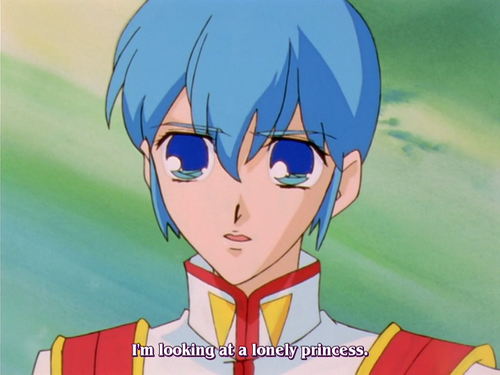
And so, Touga launches his master manipulation of Utena.  He pits her against Nanami, who is so immature and unskilled she doesn’t stand the slightest hint of a chance.  Instead, as she weeps against Touga’s chest over her loss, he can comfort her and look chivalrous to Utena.  The next day, he spies on Utena lunching with Wakaba and Anthy, telling Miki that he is watching a “lonely princess”.  Miki doesn’t understand what he’s talking about.  “You cannot see it. Only I can,” Touga tells him.  Miki sees Utena as a human being, not a stereotype, so he “cannot” see the gender role Touga feels she should fit.  But Touga’s plan is already in motion, and when she approaches him in the rose garden, he outright states that he is her prince.  At the beginning, Utena wouldn’t have bought his claim so easily, but now that he’s worked her over so thoroughly, she accepts it unquestioningly, and is shocked when he challenges her to a duel.

tumblr_inline_mokli0Rbj01qz4rgp

At first, Utena fights with her usual spirit, summoning the sword of Dios.  She is startled by the ferocity with which Touga fights, but holds her own fairly well, even when Touga aims a vicious blow at her face.  It is only when drops his guard that Utena remembers that he is supposedly her Prince and loses her resolve, creating an opening for him to strike the flower from her chest.  “How lucky for you. Now you no longer have to be caught up in these unfathomable duels,” Touga gloats.  To drive the knife deeper, he has Anthy tell Utena that she is happy being the Rose Bride.  You were always wrong, is his message.  Feminism is a lie, and women are happier when living according to their prescribed gender roles.  You were just trying to force your ideals onto a blank slate.

tumblr_inline_moklirz50L1qz4rgp

Deeply depressed, with her usual boy’s uniform torn, Utena goes to school the next day in a sailor outfit.  Her demeanor is meek and submissive, allowing Touga to touch her and ask her out even in front of Anthy.  “This is normal, right?” she says, a question aimed at no one but herself.  Touga is her Prince.  He must be right.  A girl can’t be a prince, so it’s better to just be a normal girl, doing feminine things like wearing dresses and going on dates and submitting to the advances of men.  Touga, on the other hand, is thoroughly enjoying his victory.  He accepts dates with other girls over the phone while at tea with his new fiancée, flirts with her at Student Council meetings – to the great discomfort of Juri and Miki – and even asks Utena out in front of her.  After all, he is the prince, and a prince’s whim is law.  Princes can do no wrong.  He aims to display his prowess as a paragon of masculinity to all those around him, especially those uppity women who dared to defy him.

tumblr_inline_mokljqaDdo1qz4rgp

It is Wakaba, Utena’s best friend, who saves the day.  Wakaba, an ordinary girl uninvolved with the duels, is confused and angered by Utena’s sudden transformation, blaming it on a fight with Anthy.   Utena tries to tell her she doesn’t understand, that these are forces outside of her.  “I want you to stop criticizing me,” Utena says. After all, Wakaba exists outside of the Prince/Princess/Witch paradigm.  But it is her plain, no-nonsense, thoroughly ordinary girl input that saves Utena’s spirit.  Wakaba doesn’t care about ideals or gender roles or revolutionizing the world; she sees that her best friend has been dealt a devastating blow, and wants things to go back to normal.  She sees straight through the bullshit when Utena comments, “This is normal, right?”  “Not being normal is normal for you!  This sort of normal isn’t YOUR sort of normal!” Wakaba corrects her.  “It’s like something’s been stolen from you and made you a coward!  I don’t know what it is, but if you can get it back then get it!”  These are the words that snap Utena back to herself, and she goes straight to the rose garden to challenge Touga to a duel.  Wakaba, after all, knows Utena better than anyone else at Ohtori.  She loves Utena exactly for who she is, androgyny and all, and can see that femininity is not right for her, and not making her happy.  Touga tried to force Utena in a role because she is a woman, and Wakaba reminds Utena that she does not, in fact, have to conform.

tumblr_inline_moklktJeM11qz4rgp tumblr_inline_moklldfGd31qz4rgp

Utena’s second duel with Touga, and the final one of the Student Council Saga, is the most difficult one she’s had to fight.  Juri, now an ally in the face of Touga’s egregious chauvinism, gives Utena a sword, since she no longer has the Sword of Dios.  Touga, on the other hand, wields the Sword of Dios, even bragging that he better knows how to unleash its true power: “Rose Bride! Abandon your body and protect the sword!” he orders, and Anthy kneels and kisses the tip of his sword, a gesture extremely reminiscent of fellatio, and the sword even begins to glow red.  The camera pans slowly over it, emphasizing its length.  How appropriate that the source of his power is visually similar to a sex act focused on the pleasure of the man, one that is frequently expected of partners regardless of their own desire.  Anthy, as the archetypal woman, devotes her self to supporting and protecting a dominant, oppressive man.  And it’s true, Touga does wield and enormous amount of power, slicing effortlessly through Utena’s blade and shredding her uniform as she dodges his thrusts.  The imagery throughout the battle is extremely sexual – Touga’s phallic source of power is literally destroying the clothing of his female opponent.

tumblr_inline_moklmvnKSL1qz4rgp tumblr_inline_moklnffcxP1qz4rgp

Anthy watches as a passive observer throughout the whole fight.  She thinks on how she pities Utena, wondering at how she doesn’t realize how futile it is.  She stands on the sidelines, expression unchanging, until Touga has Utena kneeling on the ground, mercilessly driving his blade through hers for a second time.  Her eyes widen, and Dios’s silhouette flashes as she things, “It’s like what happened that time…”  She sees Utena’s determination, even in the face of insurmountable challenges, and it reminds her of what true princeliness is. Her spell over the sword breaks, a tear falls from her eye, and Utena is able to throw Touga off and slice the flower from his pocket.  “I’ve taken back what I was,” a victorious Utena tells Touga.  It is through the power of women – Juri’s sword, Utena’s will, and Anthy’s emotions and memories – that he is defeated.  It’s a fitting end for the most consciously misogynistic and manipulative of Utena’s opponents.

tumblr_inline_moklo4smqO1qz4rgp

Utena and the Four Horsemen of the Patriarchy: Juri and Internalized Misogyny

tumblr_inline_mnndyris5L1qz4rgp

Juri is the only woman in a position of true institutional power in Revolutionary Girl Utena. By all appearances, she has everything: she’s beautiful, treasurer of the powerful Student Council, captain of the fencing team, and she has the respect and adoration of not only the student body, but the faculty and administration as well.  And yet, rage seethes and simmers just under her placid surface.

Oh, she hides it well, most of the time.  When Utena says, “They say that you’re trouble, and those who know your hidden face wouldn’t get within 10 meters of you,” she laughs it off, responding, “Heh, makes me sound like a wild animal.”  But it is this rage that forces her to become an unwitting tool of the patriarchal system of dueling to possess the Rose Bride.

There is no doubt that Juri rose to her position of power through her own competency.  She displays great skill at every turn, after all.  But even that is called into question early in her episode, when the vice principal offers to “discuss the student council’s plans over lunch”.  Sure, his intent could be purely professional, but this is Revolutionary Girl Utena, where an adult man’s interest in a teenage girl is almost never well-intentioned. His invitation is completely inappropriate, but exemplary of how attractive powerful women are frequently objectified and treated in ways determined by their looks, rather than their abilities.

Juri masks her anger most of the time with a veneer of aloofness, claiming not to believe in the power of miracles.  Even as Touga and Miki discuss her at their meeting, she lies back on a chaise lounge, responding only with dry remarks.  She claims that she only wants to possess the Rose Bride to disprove her power, that she is just another teenage girl.  She jokes that it would be useful when taking exams, a line she took directly from a conversation with Utena herself.

These “miracles” that Juri fights against are any unfair favors that a person may receive due to what they are, rather than who they are.  Yes, Juri is hyper-competent and ambitious, but as her conversation with the vice-principal indicates, some of her advantages may have been earned by her looks, rather than her achievements.  It’s a question that appears whenever an attractive woman achieves a high rank, recognition, or even is hired for a job where she is visible to the public: was she truly the most qualified candidate?  She doesn’t even have to sleep her way to the top, she just exist within the standards of traditional beauty.

And then comes Utena.  Utena, who is so much like a young Juri: beautiful, adored, and good at most everything.  Utena, who wears the Rose Seal without an appointment to the Student Council.  Utena, who won the Rose Bride and her powers without even understanding the rules of their dueling game.  Utena, received her ring from a mysterious man, and hopes someday to meet him again. Utena, whose connection to another woman is little more than a ticking time bomb.

This makes Juri furious.

“You make me sick. That ‘nobility’ of yours… You have it because some guy you like tricked you into having it! Besides, if dueling for the Rose Bride is stupid, then this sentimental mush for your ‘prince’ is just as stupid!  The only worthwhile thing it’s given you is nobility.  The rose seal isn’t meant for a girl like you!”

tumblr_inline_mnne0501iw1qz4rgp

“A girl like you.”  Juri’s rage and disappointment in Utena, and in the whole system, is poured into these words.  The friendliness with which she had spoken to Utena disappears in an instant, only to be replaced by hatred.  Her face twisted with anger, her locket sparkling, Juri challenges Utena to a duel to forcibly remove her naiveté.

tumblr_inline_mnne0h9D9p1qz4rgp

Utena reminded Juri of herself a few years ago, the reason why she lashes out with such anger.  Juri is never seen interacting with another female character in a friendly manner outside of flashback.  As the only woman in a position of power, who was hurt long ago by her sole female friend, she’s grown convinced that she’s not like other girls.  She saw a potential ally in Utena, another girl worthy of leading the students of Ohtori Academy.  To find out she received her ring from a boy, and only duels in hopes of meeting him, is a betrayal of the highest order.

Before the duel, Juri tells Utena, “If you win using a miracle, you deserve your conceit.”  But where has Utena displayed conceit?  Utena is probably one of the most humble characters in the entire show.  This conceit is, rather, her belief in her prince and thus the power of miracles. It is the belief that she is special and loved in a way unique to her, allowing her to participate in the duels.  It is that she came to possess the Rose Bride, not through her own doing, but through some unique power.  To believe in miracles is conceit.

In their duel, Juri attacks Utena ruthlessly.  Her skill is obviously much greater – after all, she’s captain of the fencing team.  She taunts Utena as they fight: “Poor girl.  You’re already exhausted.  But I absolutely won’t let up on you.”  As she says this, her memory flashes back to the girl she once was, and the words of her friend Shiori betrayed her, stealing away the boy she thought Juri loved.  “Believe in the power of miracles, and they will know your heart,” she said.  This was the girl who destroyed Juri’s innocence, who robbed her of the belief that she could be special and loved for it.  In the same way, Juri wants to destroy Utena’s innocence.

tumblr_inline_mnne2dM4oP1qz4rgp tumblr_inline_mnne23m6yy1qz4rgp

And so, she disarms Utena.  As she throws her down, preparing to slice the flower from her breast, Utena’s sword falls, impaling Juri’s flower and slicing it from her chest.  “No…that was just an accident!  No miracle was involved!” Juri protests, but the fight is over.  Utena, whether by accident or through the power of miracles, retains possession of Anthy.

tumblr_inline_mnne2ySdje1qz4rgp

Juri’s vicious attacks against Utena, both in and out of the dueling arena, are representative of one of the most insidious elements of the patriarchy: internalized misogyny. She hates Utena not for who she is, but what she is: a young girl who is willing to admit to something as silly and girlish as competing in a high-stakes competition in hopes of finding a boy.  In denying the power of miracles, she holds claim to the belief that she achieved her status entirely through her own merits, denying that anyone else is held back by their gender (or race, or orientation, or identity).

Utena and the Four Horsemen of the Patriarchy: Miki and the Virgin/Whore Complex

Ah, Miki.  Poor sweet, stupid Miki.

tumblr_inline_mnkxugwbCj1qz4rgp

Miki, the secretary of the Student Council, is in seventh grade and the youngest member by far.  He is also the most “normal” (as far as that goes in this series) and likable of the student council, and throughout the show usually treats Utena and Anthy with dignity and respect.  He is highly intelligent and sometimes serves as the innocent, virginal foil to his compatriots.  But innocence can lead to black and white thinking and one being easily manipulated, as is the case with Miki and his virgin/whore complex.

Miki is an accomplished pianist, frequently found playing the piano in the music room.  He takes credit for the famous piece The Sunlit Garden, claiming he and his twin sister composed it as children.  He frequently reflects on these fond childhood memories, but there is an edge of bitterness to it – when pressed, he claims that he “smashed it with his own hand.”  The anger he has toward himself is unfounded, as it is revealed he became ill just before they were supposed to perform.  Forced to go on solo, his sister fled the stage and never touched the piano again.  It’s a sad story of talent destroyed too young.

That’s what we’re led to believe.  But in Revolutionary Girl Utena, things are never as they seem, and more pieces of the puzzle fall into place when we meet his sister Kozue.  She bumps into Miki as she emerges from the piano room, knocking the sheet music from his hands.  He treats her icily, completely different from the kind, warm boy we’ve known so far.  “I gave up on you long ago,” he tells her, but she doesn’t seem perturbed.  She wasn’t in the piano room for the piano, she tells him.  Her rumpled clothes and Touga leaning against the piano, his shirt open, tell Miki everything he needs to know. Miki is horrified.

tumblr_inline_mnkxx2BzGU1qz4rgp tumblr_inline_mnkxziYxG21qz4rgp

A cigar is never just a cigar in Utena, nor is a piano ever just a piano.  The shining thing Miki seeks is his relationship with his sister, clearly, but it was not spoiled by their botched concert.  If that were the case, he wouldn’t have treated her with such naked contempt.  The piano and their song is just a symbol for what Miki believed they had.  ”No matter how much I polished my technique, I could never match the feeling of my sister’s playing,” he says. They complemented and completed each other.  But, at some point in their past, she changed.  Instead of playing piano with her brother, she spent her time pursuing boys and sex.   In Miki’s eyes, she is fallen.  Society at large takes a similar view to girls and women who actively enjoy casual sex – Kozue certainly is not in a loving, committed relationship with Touga – condemning them as sluts and whores.  Female sexuality is deviant, threatening, and worthy of condemnation.

Anthy, on the other hand, is the Rose Bride, and the Rose Bride is whoever you want her to be.   Upon hearing her piano playing, Miki immediately begins projecting his longing for the relationship he once had with Kozue onto her.  At first, per Utena’s suggestion, he recommends the Student Council cease their dueling and dissolve, freeing the Rose Bride.  “No matter how great this power is that we’re supposed to get, I can’t support a system that robs Anthy Himemiya of her personal freedom!”  A noble, selfless sentiment, and one that not a single member of the council honestly believes.

The ever-manipulative Touga recognizes this, and convinces Miki that Utena will rob him of this shining thing. Miki has come to believe that Anthy must be protected…and by “Anthy”, I mean “Anthy’s purity”.  She is the virgin of his virgin/whore complex, never mind that she has been engaged to less high-minded individuals.  “If you don’t protect the things precious to you, people will take them away from you,” Touga says, prompting Miki to ask Anthy if she’d stop playing if Utena told her to.  Of course she would, since she is the Rose Bride and must do as her fiancée says.  It doesn’t matter that Utena never actually would demand that Anthy stop playing piano – the fact that she has the capacity to take that away is enough to convince Miki to try to win Anthy in a duel.

tumblr_inline_mnky09uUfA1qz4rgp

When Miki is thinking of Utena as a potential threat, of course, it’s not actually about Anthy playing the piano, but about Utena as a sexual threat.  In Miki’s eyes, Utena could sully Anthy, defile her, rob her of that purity that he finds so desirable.  Anthy’s own desires in this situation are irrelevant, and Miki, who once desired to restore Anthy’s lost agency, returns to seeking to control Anthy and her decisions about her body.

How common is it, in society, for men to try control women’s decisions regarding their own bodies, to try to preserve virginity and purity that does not exist?  In America, we have father-daughter purity balls, abstinence-only education, and purity rings.  Young women are taught that if they have sex, nobody else will want them, although no such restrictions exist for young men.  In Japan, innocence is even further commodified, asidol singers aren’t allowed to have boyfriends so as not to destroy the fetishized version of innocence they sell their fans, and transgressions can be career-destroying. Miki is no better than those who would try to control young women’s bodies, throwing aside his high-minded ideals at the idea of Anthy not living up to an arbitrary standard.

As is the case with all the duels in Utena, Miki’s sexism is the source of his downfall.  He is a skilled fencer and very nearly defeats Utena.  However, when Anthy begins cheering for Utena to win, he is momentarily shocked, giving Utena the opening she needs to cut the rose from his chest.  He is startled at the realization that Anthy doesn’t need his protection, and that she may be happy with the person he has come to view as a threat.  This is what culture needs to realize about women – that women do not need protection from their own sexuality, and to fight their honor is a useless endeavor.

The final piece of the puzzle falls in place at the end of his second episode.  Kozue, with some friends, is playing the piano…terribly.  Her friends express shock that she ever played, and Kozue reveals that Miki always covered for her.  “Even with my sloppy playing, he could still follow it,” she explains.  But there is no emotion in it to make up for the lack of technique.  It was all Miki.  Kozue was never who he believed she was.  He merely projected upon her who he wanted her to be, and condemned her when she couldn’t live up to it.