Summary: As Takagi and Moritaka prepare to graduate middle school, they begin to dip their toes into the world of Weekly Shonen Jump by submitting one-shot manga to the anthology. Meanwhile, Moritaka’s romance with Miho gently coasts along as their feelings grow, and Takagi gets some attention of his own from the ladies…
Content Warnings: Despite the virulent sexism, things are pretty mild
A lot of stuff regarding Takagi and Moritaka’s manga getting published at Shounen Jump happened in this volume of Bakuman, but I’m not going to go much into that because it doesn’t really matter to me. It’s a vaguely interesting look at how the sausage gets made, bogged down by the editorial staff fawning over the main duo. No, I continue to be interested solely in Bakuman’s treatment of women, which, though it isn’t as severe as the first volume, is still quite cringeworthy.
Summary: Moritaka Mashiro likes to draw, but it’s not what he considers his defining trait. After his uncle, a formerly-popular mangaka, died of overwork trying to replicate his own success, Moritaka never really considered art a serious endeavor. One thing he does take seriously, however, is his crush on his cute classmate Miho Azuki. When the smartest boy in his class, Akito Takagi, finds a sketch Moritaka drew of Azuki, he suggests they team up to create manga together. Moritaka has misgivings at first – trying to break into the field is too big a gamble – but before he knows it, the two grow determined to get their manga into the popular Jump magazine.
Content warnings: a whole lot of sexism, but nothing worse than that
Would I recommend it: HAHAHAHAHAHAHAHAHAHAHAHA no
Note: I apologize for the quality of the images – I took pictures of the book using my phone
I’ll be honest here – I did not go into Bakuman in good faith. I started it knowing full well about Ohba and Obata’s disdain for women. The series is well-loved and critically acclaimed enough that I’m sure that there’s plenty to like about it, but since I am specifically taking aim at the parts that frustrate and anger me, I’m pretty much blind to those elements. No, I read Bakuman expecting to hate it and, shockingly, was correct.
It’s also incredibly masturbatory
There’s a lot of ways for media to be sexist. Objectification and male gaze are constant sources of irritation even in otherwise good series; and with some series it’s as simple as forgetting women exist beyond decorations and failing to give them a role to play in the story. I wouldn’t describe any of these as actively misogynist so much as thoughtless adherence to pre-established tropes and expectations. That’s what makes it frustrating that it’s as prevalent as it is. That also has the side effect of making it shocking to come across a series that doesn’t just ignore or marginalize women, but treats them with active scorn. That’s why when I read the first volume of Bakuman, by the same writer/artist team as Death Note, I was taken aback by its naked misogyny.
Why does it matter? Why should we have these conversations? It’s not like a headstrong girl will go out and read a shoujo manga about a girl in a relationship with an abusive boy and instantly become a doormat. But it normalizes and romanticizes abusive behaviors and creates a culture of abuse. Once again, I want to emphasize, if a girl reads a manga and thinks that it’s okay to be treated like this and someone proceeds to, it’s not her fault. It is not her fault! This creates a culture of abuse that associates aggression and dominance with masculinity and sacrifice of the self for the sake of romance: “I love him, therefore I have to put up with this. He only treats me like this because he loves me.” These are very common cultural myths that need to be actively combatted and actively talked about and criticized, or else impressionable young readers – I started reading manga myself when I was about twelve years old, well before I had ever been in a relationship and while my personality was still forming. Luckily I was also reading things like Tamora Pierce, who writes about confident young women, though she has her own issues, like the age difference thing…
Now we’re getting more into the actual, physical forms of abuse that are not just tropes in fiction. This is physical abuse – pulling hair, punching, slapping, kicking, biting, anything that brings harm to your body. Damaging your property out of anger. Forcing you to use drugs or alcohol was a really weird one in Hana Yori Dango because he kidnaps her, drugs her, and she wakes up to being given a makeover, and that’s like, “Oh, he just doesn’t understand how to be nice to her, that’s why he did that. He was just trying to be nice!” He drugged her. He drugged her. The property tends to involve phones, because that is an avenue of communication with other people. If they’re communicating with other people, the guy will destroy the phone in a temper tantrum.
One of the things people brought up as something that made them uncomfortable was age differences. It’s a very common fantasy for young women, which is why it’s so common in shoujo manga. “Oh, this hot teacher… he’s so attractive… What if he fell in love with me?” And people generally mentioned Sailor Moon, because Mamoru is in college and Usagi is in middle school; and this particular couple in Cardcaptor Sakura, because she’s in elementary school and he’s her teacher. [audience groans]
It is a common fantasy, but there’s an inherent power imbalance here, and all the time you see stories about young women who end up sleeping with their teachers and it’s what they thought they wanted – and this is not victim blaming, it is 100% on the adults to not do it with them – but since they see these fantasies, and they find themselves in these situations, they don’t have the tools to get away. Once again, I want to emphasize, it is never the victim’s fault. I don’t want to come across like I’m victim-blaming, ever.
Summary: Yusaku Godai hates his life: he lives in a run-down boarding house, his neighbors are all weirdos and drunks who have no greater pleasure than tormenting him, and he’s struggling to pass the entrance examinations of even third-rate colleges. He’s just about ready to move out when a beautiful young woman walks in and introduces herself as Kyoko Otonashi, the new manager. It’s love at first sight for Godai, but the recently-widowed Kyoko is still in mourning for her deceased husband.
Anime/Manga
Potential Triggers: Nothing major – a lot of discussion of death
Grief is a funny thing. It’s hard for people who have never lost a loved one to understand the roller coaster of emotions. The way it quietly follows you for years only to emerge, full force, when you least expect it. People try to simplify it to make it easier to understand, such as with the “seven stages of grief.” These attempts fail to capture the messiness of such emotions, and how every individual experiences them differently. Rumiko Takahashi’s Maison Ikkoku, a love story about a grieving widow and a penniless student who falls in love with her before she’s ready to move on, portrays that messiness with an unusual degree of sensitivity. The story spans seven years, as Kyoko Otonashi and Yusaku Godai grow to the point where they’re in the right place emotionally for each other.
It’s said that men are attracted to women similar to their mothers, but tiny, adorable Rinko Yamato bears little resemblance to Takeo’s burly, no-nonsense mother Yuriko. Mama Gouda is the source of her son’s exceptional physique, compassionate nature, and drive to protect the vulnerable. While Yamato’s cuteness and femininity make her relatable, Yuriko sends the message that those qualities aren’t mandatory to be loved and worthwhile, and that there’s more than one way to be a woman.
Early in the series, Yuriko tells her son, “You’re going to be a big brother soon.” Takeo, while happy, grows concerned, both for her age and the bags of groceries she’s carrying. Irritated, she tells him that she carried plenty of heavy things when she was pregnant with him, and that she’s “chronologically 40, but the doctor says [she’s] physically 22.” Takeo’s insistence on sheltering his mother, who continues to carry heavy grocery loads and do all the same physically taxing housework, is a regular source of annoyance to Yuriko. Pregnant women are often dehumanized – we treat them as if they’re made of glass, and the baby growing inside them is more important than they are themselves. Every body responds to pregnancy differently, and some women are just as capable of hard work as they are at any other time in their life. Tough-as-nails Yuriko has already survived one pregnancy without anyone sheltering her, and she’s just as fit as she was back then. She takes pride in her work taking care of the home. No wonder she gets cranky when her son acts like he knows better, even if it is coming from a good place.
It’s no wonder Takeo managed to forge such a strong, equal relationship with Yamato. He has a great model for it: his own mother and father. Though it does fall along traditional gender lines, with his mother staying at home to care for the apartment and his father working, there are signs that the two share a more equal relationship than most. Whenever his father, Yutaka, gets home, the first thing he does is go clean the bathtub. When baby Maki is born, he is also shown playing with her. These are small things, but with the division of labor as extreme as it tends to be in Japan, it can be difficult for fathers to be even that involved. Husbands being more involved in caring for the home is linked to greater satisfaction in marriages, and Yutaka and Yuriko have clearly created a healthy and loving home environment for Takeo. Yutaka clearly appreciates his wife for who she is, with her physical and emotional strength. He tells Takeo the story of how he fell in love with her: when they were young, they worked in the same office. At a work outing, Yuriko saved a co-worker from a falling pot of hot water, getting hit by the scalding water in her place. When Yutaka went to check on her, she said, “When I see cute girls like her, I just want to protect them, you know?” Yutaka continues, “For the first time in my life, I thought I’d want to ride out the turbulent waves of life with someone like her!” He proposed by saying he wanted to protect her, but “[she’s] so strong, I’ve never gotten around to protecting her.”
Yuriko’s protective instincts and her emotional strength are a major part of her self-identity. While Takeo is out buying those groceries he refused to let her carry, she tells Yamato, “Men are such wimps, women have to be the strong ones.” While I’m not a fan of gendered statements like that, truth still rings through the line. Yamato is confused, saying that Takeo is plenty strong, but Yuriko tells an anecdote from when he was five and ran into the street. He was almost hit by a car and she had to dive to protect him, scraping her arm in the process. Takeo panicked and begged her, “Don’t die, Mom!” Strength comes in many forms, and the form she refers to here – protectiveness, self-sacrifice, and keeping a brave face in a crisis – are commonly associated with motherhood. Yuriko displays this strength many times in the episode, but it comes at a price. When a fellow pregnant woman she met at the clinic slips on some steps, Yuriko catches her, but her own belly ends up absorbing the impact. She ends up going to the hospital and entering labor early, even giving up her wheelchair to the delivery room so the first-time mother-to-be sharing her room could have it. Along every step of the way she puts on a brave face for her son and his friends, shooting them a thumbs up and a wink even as she’s doubled over in pain. She even tells them flippantly, “I’m going to push one out now!” Hiding her pain and fear is the only way she can take care of Takeo in her current position; otherwise, he’d lose his mind with worry. She only drops her brave face in front of her husband, telling him sadly, “I wonder if our baby’s mad at me…” Yutaka reassures her, “You just wanted to protect them both.” Even the strongest feel vulnerable sometimes, and seeing the emotional partnership between the couple is touching.
When OreMono came out, some wondered if a series where Takeo were the girl would ever be viable. Well, she may not have a whole series focused on her, but that is Yuriko Gouda’s story. A woman who, though not traditionally beautiful, is admirable and beloved because of the power of her compassion and who thinks nothing of sacrificing herself to protect others. The Gouda family is beautiful because it shows that not just one kind of woman is worthy of love, and that you don’t need to change who you are to fit artificial ideas of how you should act because of your gender. When I become a mother myself, I hope I can be as strong – physically and emotionally – as Yuriko.
Summary: Oversized, brash, but good-hearted Takeo Gouda has a problem: every girl he has ever liked crushes on his best friend Sunakawa, who inevitably rejects them. When Suna seems to take a shine to Rinko Yamato, an adorable girl Takeo rescued from a pervert on the train, Takeo decides to shove aside his own feelings and hook the two up. But it’s not Suna that Yamato is interested in!
Anime/Manga
Potential Triggers: Nothing really to speak of! What a nice change of pace.
Ore Monogatari, or MY Love STORY!! in English, is a delightful little confection and a welcome addition to the shoujo romance canon.Takeo, Suna, and Yamato all have great chemistry,, and the love they all have for each other shines through in the writing. Their personalities – brash Takeo, perceptive Suna, and tougher-than-she-looks Yamato – cut through the genre’s tired cliches. Takeo is worried about Yamato’s feelings but doesn’t know how to talk to her about it? Practical Suna is there with an accurate read on the situation to counsel his sweet-but-dense best friend. Like magic, awkward situations and misunderstandings are resolved, allowing the characters to grow and become closer instead of being torn apart by petty conflicts.
A heterosexual romance with a male point-of-view character is unusual for shoujo, but it ends up being a major source of OreMono’s strength. It creates a situation where both of the main couple must be dynamic and interesting, since readers must be able to sympathize with both of them. Larger-than-life Takeo is as sweet-natured as they come, despite his appearance, and a deeply loving boyfriend. He’s also quite dense and struggles with self-doubt. Yamato is a girly girl through and through. She has a squeaky voice, and loves cute things, baking, and texting. She also loves Takeo, but also gets frustrated when he treats her like she’s made of glass.The show does has a problem early on where it sets Yamato’s attraction to Takeo up in opposition to every other girl he encounters. Whenever he helps one, they’re terrified of him but thank handsome Suna instead. Even Yamato’s friends judge him by his unconventional appearance. As a result, women other than Yamato come across as superficial and shallow at first, but the situation improves as the show introduces more fully-realized women. Together, they form one of the kindest, sweetest pairs to be found in the romance genre and even their most mundane conversations are enjoyable.
As the POV character, Takeo must be relatable and likable enough that we feel comfortable in his head, but as the man in the relationship, he also must be interesting enough that we can imagine dating him. Yamato, on the other hand, is an othering of the familiar as Takeo gets to know his girlfriend. Things that are a matter of course for many Japanese girls, such as cute animated text messages, are new and exciting for Takeo, who doesn’t really have any female friends. Her speech patterns, hobbies, and career ambitions – to be a kindergarten teacher or midwife – are all extremely feminine. Yet, since readers will be far more familiar with these things than Takeo, she must have personality beyond her mystifying girliness, but be sweet enough to be a good match for him.
The importance of communication between the two lovebirds comes up early and often, and one of their first miscommunications is about the all-important subject of sex, specifically female purity. Takeo is surprisingly conservative, not out of any misguided beliefs on how things should be but how he believes things are. When Yamato acts shy around him, especially when she sees him in his undershirt, he interprets that as her being pure and reassures her that he won’t touch her until after they graduate. When she starts acting distant, Takeo is puzzled. Shouldn’t she be more at ease? Both Yamato and Takeo have grown up in a culture that values female sexual purity and treats female sexual desire as an aberration, so it’s unsurprising that when Yamato hears that, her response is of guilt and shame. After all, she admits to Ai Sunakawa, Suna’s older sister, her attraction to Takeo is just as much physical as it is mental and emotional. She “has impure thoughts” and wants to do things like “holding hands”. (How brazen!) When she confesses this to Takeo, she actually has tears in her eyes.
Acknowledging Yamato’s physical attraction to Takeo is an awesome move on the part of the series. Not only does it respect her as a sexual being, despite her extreme cuteness and seeming innocence, but it also shows that it’s okay to have unconventional taste. Often when female characters are paired with male characters who aren’t conventionally attractive, it’s despite his looks. This sets the expectation that women should be less concerned with physical and thus sexual attraction, reinforcing the implicit belief that women who do care are shallow or sluts. With an everygirl like Yamato, it’s a powerful message.
Of course, learning the actual logistics of holding hands presents its own challenges.
Yamato and Takeo communicating about their problems sets a strong precedent for their relationship that carries through the entire series (albeit occasionally facilitated by long-suffering Suna). The two feel comfortable and safe together; when they are stranded in the woods for a night, neither is afraid that Takeo won’t be able to “control himself”, a common trope in romance manga. The final two episodes of the series introduce Kouki Ichinose, a twenty-one year old pastry chef and the opposite of Takeo. When Yamato, working at the same patisserie, compliments one of his cakes, he falls for her hard – so hard, in fact, that he asks Takeo to break up with her. The way he sees it, he’s better for her in every way. They have common interests, unlike the culinarily-challenged Takeo, plus he’s traditionally attractive, at the top of his field, and older. He even has a car, a major symbol of adulthood and status in teen-oriented manga. When Takeo refuses, Ichinose comes up with a new plan: if he wins an upcoming national pastry contest, he’ll confess his feelings. He never even bothers to entertain the idea that she’ll reject him. Takeo is jealous and protective in part because he agrees that Ichinose is, on paper, a better match for her. After struggling with those feelings, he decides that if she really does end up wanting to leave him for Ichinose, he’ll be the bigger man figuratively as well as literally and support her. Yamato’s happiness is priority one for him and he doesn’t want to keep her trapped in a relationship if there are better prospects. Still, he waits for Yamato to make her own decision rather than breaking up with her like Ichinose requested, because it’s her choice to make. His approach to the situation is far more emotionally intelligent than Ichinose’s, even if he is plagued by doubt. Ichinose, on the other hand, is presumptuous and self-absorbed. He starts using her given name the same day he meets her, a step Takeo hasn’t even managed to take after almost a year of dating. When she talks, he usually makes wild assumptions about what she really means, projecting his own feelings onto her. He puts her on a pedestal, going so far as to declare her his ‘muse’.
That’s not what she said, bro.
His entitled behavior is common in men who carry some degree of prestige, under the guise of “confidence”. In addition, he is older than Yamato and outranks her at work, creating a power imbalance that would make any relationship inappropriate. His lack of interest in actually listening to her makes him oblivious to the fact that she is smitten with Takeo, something that is obvious to everyone else she meets. When he asks her to be his “one and only muse”, she refuses, telling him she really loves Takeo and she’s “not a muse or anything. Just an ordinary part-timer.” She dislikes being put on a pedestal, preferring the boy who sees her as a person over the man who doesn’t.
As Dee of Josei Next Door said in her episode summaries on Anime Evo, in some ways Ore Monogatari is like a how-to guide for young couples. Takeo and Yamato get through any pitfalls in their relationship by communicating honestly and treating each other with respect. It’s a refreshingly healthy dynamic, and written as just as interesting as the drama-laden tension of most teen romance. Few people may be as sweet-natured as Takeo and Yamato, but their approach to love is one that everyone should take note of: always assume the best, treat your partner with respect and, failing all else, get by with a little help from your friends.
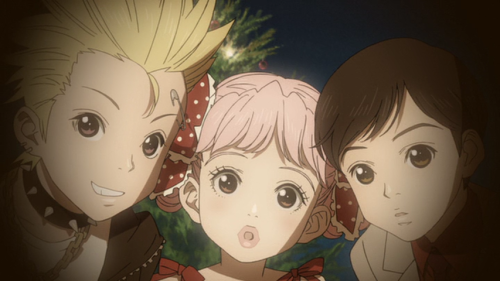
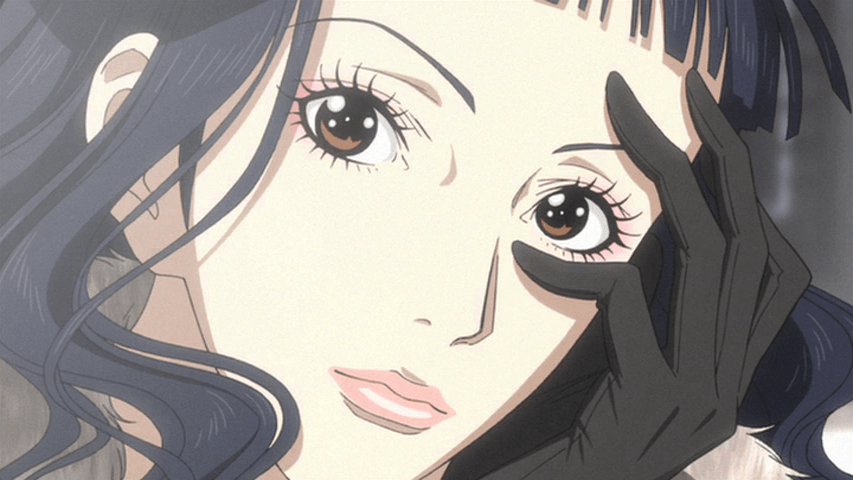
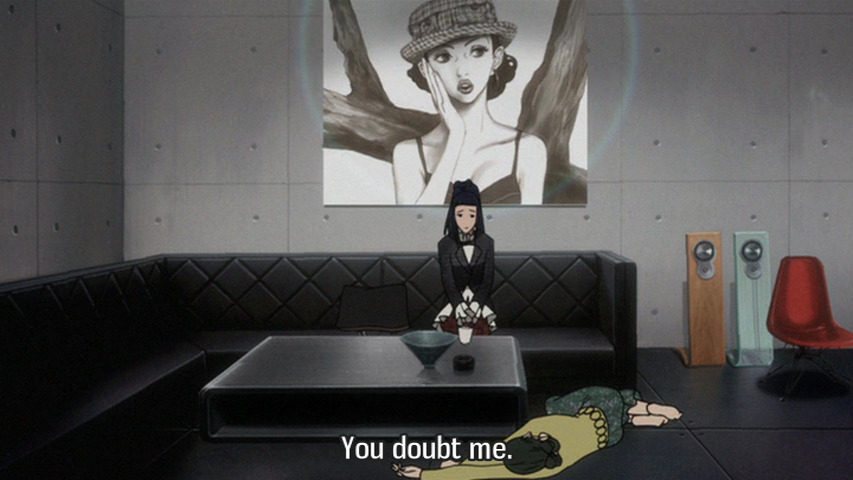
While Yukari’s story is a wonderful coming age story of a girl learning not to be defined by those around her, the female secondary characters, Miwako and Isabella, are not so lucky. Although they too are coming of age in their own right, their storylines are severely lacking compared to Yukari’s. That is more or less to be expected, considering they are supporting characters, but they deserve much more fleshed out characterizations than they got.
Miwako’s primary role in Paradise Kiss is Yukari’s friend and confidant, an essential ally in her tumultuous period of self-discovery and shifting identity. She plays this role admirably, supporting Yukari and using her connections to introduce her to the fashion industry. Yukari has, however, unwittingly reintroduced an old conflict back into her life: the love triangle between her, her boyfriend Arashi, and their childhood friend Tokumori Hiroyuki. Miwako chose Arashi and cut off contact with Hiroyuki years ago, despite harboring feelings for both of them. Now that Yukari has gotten Miwako and Hiro back in touch, Arashi is obsessively jealous and possessive.
If that summary sounds like a run of the mill shoujo soap, it more or less reads that way. One of my consistent objections to shoujo manga is that they romanticize men who treat the women in their lives like trash. Arashi, despite his unconventional appearance, behaves in a way that is fairly typical for that sort of character: when he learns that Miwako is in touch with Hiro, he starts acting like a complete ass. Around midway through the series, he snottily refuses to do beadwork with Miwako at her house: “I’m mad because you’ve been talking to me all day like nothing happened. You’ve got some kind of nerve… You were playing dumb all this time. I’ve gotta think something happened.” “Miwako thought you’d be mad if she told you! You get mad either way, Arashi!” Miwako feels trapped and guilty not because of any wrongdoing, but because of Arashi’s childish, passive-aggressive tactics and irrational jealousy.
As the series continues, Arashi grows increasingly paranoid and controlling, and Miwako turns more and more to Hiro for emotional support in dealing with her volatile boyfriend. Eventually, Miwako comes into the bedroom to find Arashi going through her phone and looking at the texts she’s been exchanging with Hiro, and throws it against the wall in rage, breaking it. There is no two ways to look at it: Arashi’s behavior is abusive. No amount of justification, apologizing, or self-deprecation will change that. It only gets worse as Hiro, talking with Arashi, reveals that he knows how he got Miwako to choose him: he raped her, using sex to bind her to him. Arashi feels guilty, for their past and his present temper, but Hiro reassures him, “Miwako understood best how much you loved her. That’s why she wanted to make amends. Because she thought her reaction might hurt you.” I can not evenbegin to described how fucked up and frustrating this whole scene is, seriously marring an otherwise great manga. Arashi realizes his actions are wrong and his choices hurt Miwako. The other characters are all much, much, much too willing not only to forgive him, but actively assuage his guilty conscience. There is nothing in the text to imply that what Arashi did was reprehensible, nor are there any consequences for his actions beyond his guilt.
Part of the reason for Arashi’s insecurity is his guilt for “turning Miwako into a sexual being,” Hiro says. But Miwako didn’t suddenly turn into a sexual being the moment she was involuntarily penetrated by a penis. Female sexuality isn’t defined or initiated by the loss of virginity. Chances are, Miwako was already a sexual being, with her own desires and feelings well before she was assaulted, especially considering her home life was probably less restrictive and repressive than average. At best, the attitude that Arashi turned Miwako into a sexual being is ignorant; at worst, it is fuel to the idea that women are naturally purer than men, but can be sullied by sexual contact. The scene, even the whole subplot, is an ugly mark against an otherwise wonderful story.
Really, the fact that Miwako’s arc is a highly conventional love triangle is a shame. Early in the manga, Miwako talks to Yukari about how she struggles creating fashion designs that are truly her own, and not an imitation of her sister Mikako’s distinctive style. At the end, Miwako goes to work for Happy Berry, excited at the idea of being a help to her sister. This would have been a far more interesting arc for her: coming to terms with the fact that while she may not be destined to be a designer herself, she can still do what she loves and be an asset to those around her.
Isabella meets the bare minimum for a trans character, which is admittedly better than most series manage. Her gender identity is respected by the text and never questioned and, outside of some ignorant comments made by Yukari at the very start referring to her as a “drag queen”, the other characters are respectful as well. Her butler, who basically raised her, says he is “proud that she’s grown from such a timid young boy to an elegant lady.” When Arashi, annoyed that she’s asking the men to carry the groceries, complains, “You’re a gentleman too, Daisuke Yamamoto,” Yukari, Miwako, George, and Isabella herself react in shock and horror. There are no cheap “dude looks like a lady” jokes, nor any about her femininity or masculinity.
Unfortunately, there’s not too much to say about Isabella’s character other than “inoffensive transwoman” and “group mom”. She has no character arc on her own, instead playing a purely supportive role to the others. There are few statements to be made about her other than her appearance, her gender identity, and her position within the group. When she is doing Yukari’s makeup for the student fashion show, she tells a story from her childhood. In third grade, she came out to George and a few days later, he showed up on her doorstep, insisting they celebrate her birthday and giving her a box. When she tells him that her birthday was months ago, he says, “That was Mr. Yamamoto’s birthday.” The box he gave her contained a beautiful dress and hat he had made for her, his first design ever. It’s a sweet enough story, but it’s more about George and the power of fashion than about Isabella. Nonetheless, seeing a trans character who is loved and supported by those around her is a joy.
Yukari’s career of choice does present some issues. Yazawa chose it due to her love of fashion – she went to school for fashion design before she became a mangaka – and she displays some truly incredible fashion design throughout the series. Nonetheless, I am leery of a coming of age story where a woman’s primary asset is her appearance. Yukari was blessed with natural good looks, and because of that all she needs to do is knock lightly and all the doors will swing open. Mikako tells Yukari, “The fact that everything is falling into place is just proof that this is the right path for you.” If only things were that easy in reality! Yes, it takes initiative for her to knock, but it’s all too convenient. “If my longer-than-average limbs will be weapons for survival, maybe I should be a bit grateful to my parents for making it so.” In a world where a woman must be, above all else, beautiful, it is complacent at best to set a story in a world where beauty is favored above all other qualities. The modeling industry runs rampant with abuses: eating disorders, sexual abuse, racism, and a multitude of other problems. Yazawa’s vision of the industry is a kinder, gentler one, where the right friends, long legs, and a desire to make it suffice. Yukari’s success is due to her initiative, yes, but she is helped along amply by those around her, with no real obstacles other than her mother’s obstinacy. While this is preferable to a salacious soap opera where she is exploited at every turn, it all just seems a bit too glossed over.
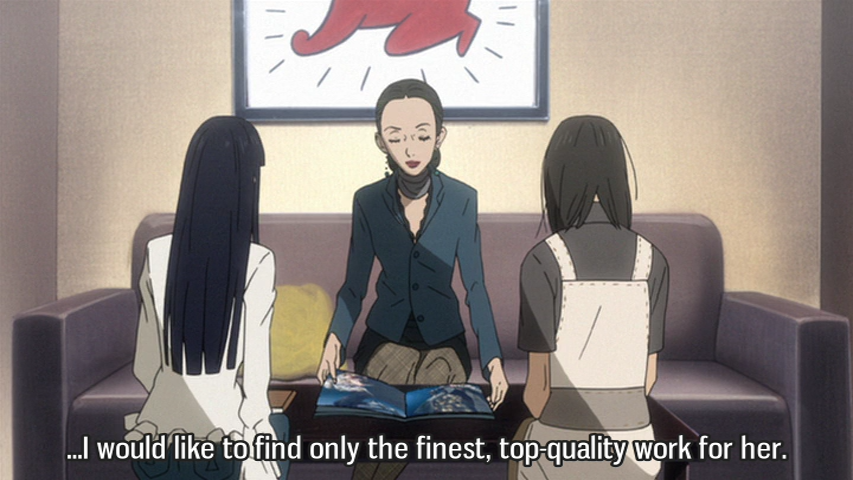
There is, on the other hand, a distinct advantage. Yazawa’s version of the fashion world is one dominated by women, allowing Yukari to meet and be mentored by accomplished women in her field. Mikako, star of the prequel manga Gokinjo Monogatari, has gone from temperamental teenager to a highly sought-out fashion designer and the president of her own company; she even continues to go by her maiden name, despite marrying her high school sweetheart and lead photographer, Yamaguchi Tsutomu. Shimamoto Kozue is a former fashion model using her knowledge of the industry to start her own agency. In Japan, it is rare for women to progress above the position of office lady; industries where women are not only taken seriously, but at the forefront are rare. In this context, it makes more sense: the story of a young woman taking charge of her own life belongs in a world where women can take charge. She needs role models and mentors, women who have succeeded due to their drive and determination, in addition to friends and peers.
“Watching this slightly rude, but clearly prettier woman laugh at me, I felt like I got a glimpse of the world I was entering into,” Yukari thinks as Shimamoto laughs at her so hard she falls on the floor. This is a world where none of the usual rules apply, clearly.
Mikako and Shimamoto aren’t just businesswomen; they’re a bit strange. Quirky. Off-beat. They’re the kind of people who would feel restricted operating in the normal business world of sober suits and polite bows and endless keigo. The very same kind of people as Paradise Kiss, and that Yukari is learning to be, and really was always meant to be, now that her mother is no longer trying to stuff her into a pigeonhole she doesn’t fit. After her meeting with Mikako, Yukari walks through the streets of Harajuku, and says to herself, “It’ll be fine. I won’t lose. Even if my folks desert me, or I stick out from society, I won’t vanish.” That, more than anything else, is the most important lesson she learns from these older women. There’s plenty of time to learn about makeup application and business savvy and the best way to pose on a runway.
What Yukari needs to know, from older and more experienced women, is that there is room for someone like her in the world. That she can exist outside the restrictive mold she’s been forced into her entire life and not only get by, but flourish.




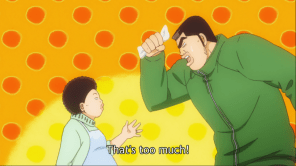 Pregnant women are often dehumanized – we treat them as if they’re made of glass, and the baby growing inside them is more important than they are themselves. Every body responds to pregnancy differently, and some women are just as capable of hard work as they are at any other time in their life. Tough-as-nails Yuriko has already survived one pregnancy without anyone sheltering her, and she’s just as fit as she was back then. She takes pride in her work taking care of the home. No wonder she gets cranky when her son acts like he knows better, even if it is coming from a good place.
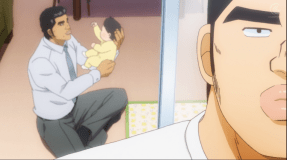 These are small things, but with the division of labor as extreme as it tends to be in Japan, it can be difficult for fathers to be even that involved. Husbands being more involved in caring for the home is linked to greater satisfaction in marriages, and Yutaka and Yuriko have clearly created a healthy and loving home environment for Takeo. Yutaka clearly appreciates his wife for who she is, with her physical and emotional strength. He tells Takeo the story of how he fell in love with her: when they were young, they worked in the same office.
  At a work outing, Yuriko saved a co-worker from a falling pot of hot water, getting hit by the scalding water in her place. When Yutaka went to check on her, she said, “When I see cute girls like her, I just want to protect them, you know?” Yutaka continues, “For the first time in my life, I thought I’d want to ride out the turbulent waves of life with someone like her!” He proposed by saying he wanted to protect her, but “[she’s] so strong, I’ve never gotten around to protecting her.”
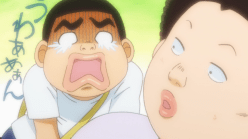 Strength comes in many forms, and the form she refers to here – protectiveness, self-sacrifice, and keeping a brave face in a crisis – are commonly associated with motherhood. Yuriko displays this strength many times in the episode, but it comes at a price. When a fellow pregnant woman she met at the clinic slips on some steps, Yuriko catches her, but her own belly ends up absorbing the impact. She ends up going to the hospital and entering labor early, even giving up her wheelchair to the delivery room so the first-time mother-to-be sharing her room could have it. Along every step of the way she puts on a brave face for her son and his friends, shooting them a thumbs up and a wink even as she’s doubled over in pain. She even tells them flippantly, “I’m going to push one out now!” Hiding her pain and fear is the only way she can take care of Takeo in her current position; otherwise, he’d lose his mind with worry.
  She only drops her brave face in front of her husband, telling him sadly, “I wonder if our baby’s mad at me…” Yutaka reassures her, “You just wanted to protect them both.” Even the strongest feel vulnerable sometimes, and seeing the emotional partnership between the couple is touching.
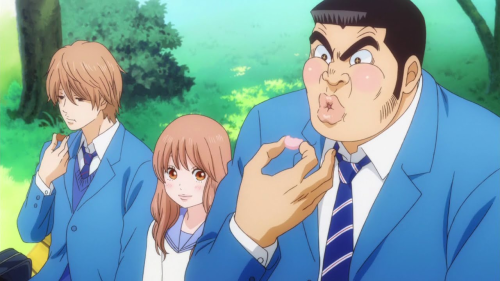
 She also loves Takeo, but also gets frustrated when he treats her like she’s made of glass.The show does has a problem early on where it sets Yamato’s attraction to Takeo up in opposition to every other girl he encounters. Whenever he helps one, they’re terrified of him but thank handsome Suna instead. Even Yamato’s friends judge him by his unconventional appearance. As a result, women other than Yamato come across as superficial and shallow at first, but the situation improves as the show introduces more fully-realized women. Together, they form one of the kindest, sweetest pairs to be found in the romance genre and even their most mundane conversations are enjoyable.
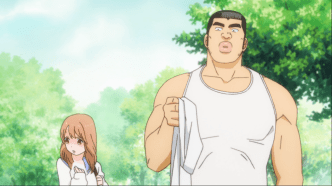 When she starts acting distant, Takeo is puzzled. Shouldn’t she be more at ease? Both Yamato and Takeo have grown up in a culture that values female sexual purity and treats female sexual desire as an aberration, so it’s unsurprising that when Yamato hears that, her response is of guilt and shame. After all, she admits to Ai Sunakawa, Suna’s older sister, her attraction to Takeo is just as much physical as it is mental and emotional. She “has impure thoughts” and wants to do things like “holding hands”. (How brazen!) When she confesses this to Takeo, she actually has tears in her eyes.
 but it also shows that it’s okay to have unconventional taste. Often when female characters are paired with male characters who aren’t conventionally attractive, it’s despite his looks. This sets the expectation that women should be less concerned with physical and thus sexual attraction, reinforcing the implicit belief that women who do care are shallow or sluts. With an everygirl like Yamato, it’s a powerful message.
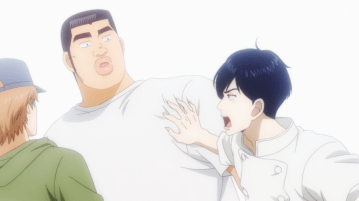 When Yamato, working at the same patisserie, compliments one of his cakes, he falls for her hard – so hard, in fact, that he asks Takeo to break up with her. The way he sees it, he’s better for her in every way. They have common interests, unlike the culinarily-challenged Takeo, plus he’s traditionally attractive, at the top of his field, and older. He even has a car, a major symbol of adulthood and status in teen-oriented manga. When Takeo refuses, Ichinose comes up with a new plan: if he wins an upcoming national pastry contest, he’ll confess his feelings. He never even bothers to entertain the idea that she’ll reject him. Takeo is jealous and protective in part because he agrees that Ichinose is, on paper, a better match for her. After struggling with those feelings, he decides that if she really does end up wanting to leave him for Ichinose, he’ll be the bigger man figuratively as well as literally and support her. Yamato’s happiness is priority one for him and he doesn’t want to keep her trapped in a relationship if there are better prospects. Still, he waits for Yamato to make her own decision rather than breaking up with her like Ichinose requested, because it’s her choice to make. His approach to the situation is far more emotionally intelligent than Ichinose’s, even if he is plagued by doubt. Ichinose, on the other hand, is presumptuous and self-absorbed. He starts using her given name the same day he meets her, a step Takeo hasn’t even managed to take after almost a year of dating. When she talks, he usually makes wild assumptions about what she really means, projecting his own feelings onto her. He puts her on a pedestal, going so far as to declare her his ‘muse’.





 I Have a Heroine Problem